Introduction
A warm, slightly tangy scent of kefir mingles with the deep, earthy perfume of cocoa as the batter meets the pan.
[tasty-recipe id=”9937″]
This sheet cake delivers a feather‑light crumb that stays moist for days, making it perfect for a relaxed weekend brunch or an unexpected gathering.
Imagine the first bite: the soft sponge gives way to a glossy chocolate‑chip speckle, while a whisper of coconut crowns the surface, adding a subtle crunch.
Beginners, busy families, and make‑ahead planners will all find confidence in the straightforward steps and forgiving ingredients.
Scroll down to see the precise ingredient list and start creating a kefir sheet cake that feels both elegant and effortless.
Ingredients
- 2 cups all-purpose flour – provides structure; no substitute needed
- 1 ¼ cups granulated sugar – adds sweetness; can replace with coconut sugar
- 1 cup kefir – supplies moisture and tang; substitute with buttermilk
- 1 medium egg – binds batter; replace with 1 Tbsp flaxseed meal + 3 Tbsp water
- 3 tablespoons Dutch cocoa powder (unsweetened) – gives chocolate flavor; natural cocoa works too
- 1 teaspoon baking soda – creates lift; use ½ teaspoon baking powder as alternative
- ½ cup sunflower or canola oil – adds tenderness; melted butter may be used
- 1 cup chocolate chips (dark or semi‑sweet) – pockets of melt; chopped chocolate works
- ⅓ cup heavy cream – base for ganache; half‑and‑half can replace
- 1 cup unsweetened shredded coconut – topping texture; toasted almond slivers are an option
This exact combination balances leavening, fat, and acidity to produce a cake that is airy yet sturdy enough to hold a glossy ganache and a coconut crown.
Step‑by‑Step Instructions
Preparation
- Preheat the oven to 350°F (175°C) and line a 9×13‑inch sheet pan with parchment paper.
- In a large bowl, whisk together flour, cocoa powder, sugar, and baking soda until uniformly combined (no streaks).
- In a separate bowl, beat the egg, then stir in kefir and oil; mix until the liquid looks smooth and slightly glossy (do not overmix).
- Gradually pour the wet mixture into the dry ingredients, folding with a rubber spatula until just incorporated; the batter should be thick but flow slowly (stop when no dry spots remain).
- Fold in chocolate chips, distributing them evenly without crushing (chips should stay whole).
Cooking
- Spread the batter evenly in the prepared pan, smoothing the top with an offset spatula; the surface should be level and slightly domed.
- Bake for 25–30 minutes, rotating the pan halfway; the cake is done when a toothpick inserted in the center comes out clean and the edges have turned a deep golden‑brown.
- Remove from oven and let cool in the pan for 10 minutes; then transfer to a wire rack to cool completely (this prevents sogginess).
Assembly
- While the cake cools, heat the heavy cream in a small saucepan over medium heat until it just begins to simmer; remove from heat.
- Stir the chocolate chips into the hot cream until a glossy ganache forms; let it sit for 2 minutes to thicken slightly.
- Pour the ganache over the cooled cake, using a spatula to spread it to the edges; the ganache should set with a thin sheen.
- Scatter the shredded coconut over the ganache while it’s still soft; press lightly so it adheres.
Serving
- Allow the ganache to set for 15 minutes before slicing; cut into 24 squares for standard servings.
- Serve at room temperature or slightly chilled for a firmer texture.
The kefir sheet cake is ready when the ganache has a soft sheen and the coconut topping is lightly toasted.
Why This Recipe Works
The acidity of kefir reacts with baking soda, creating carbon dioxide bubbles that lift the batter without the need for a separate cream of tartar step. This reaction also softens gluten formation, resulting in a tender crumb that stays moist long after baking.
Oil, rather than butter, coats the flour particles uniformly, preventing excess gluten development and ensuring the cake remains airy. The high fat content of the oil also helps the chocolate chips stay distinct pockets rather than melting completely into the batter.
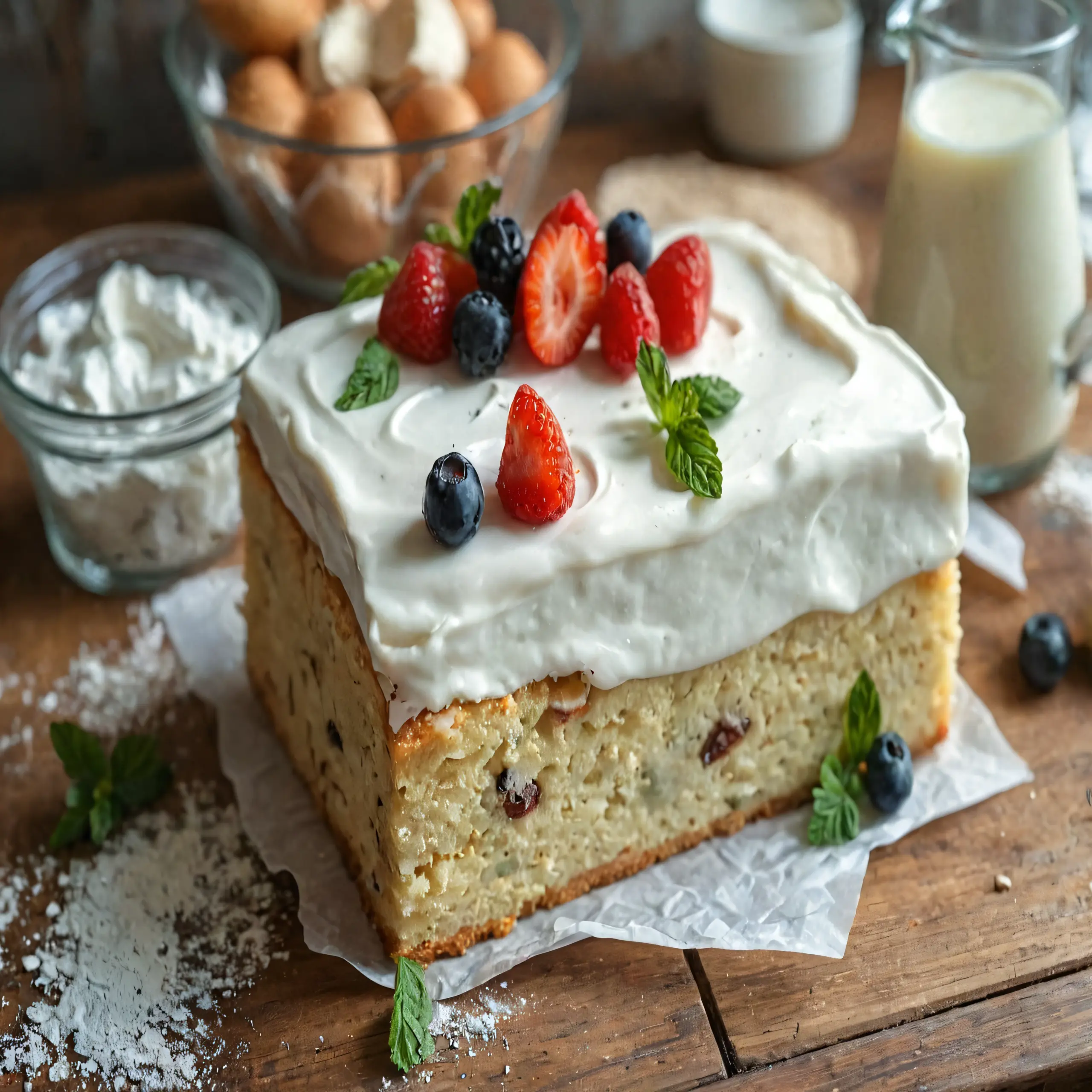
Cooling the ganache slightly before spreading allows it to coat the cake evenly without running off, while the coconut’s natural oil content helps it cling without additional adhesives. Together, these scientific choices produce a sheet cake that is both structurally sound and delightfully soft.
Tips for Reliable Results
- Do not overmix after adding the wet ingredients; overmixing develops gluten, making the cake dense and rubbery.
- If the batter looks too thick, add a tablespoon of kefir at a time until it flows slowly; too thin batter will spread unevenly and bake unevenly.
- Use a light‑handed touch when folding in chocolate chips; crushing them creates unwanted bitter pockets.
- Rotate the pan halfway through baking; ovens often have hot spots that cause uneven browning.
- For a truly glossy ganache, ensure the cream reaches a gentle simmer before adding chocolate; if the cream is too cool, the ganache will be grainy.
- Toast the shredded coconut lightly in a dry skillet for 2–3 minutes before sprinkling; this enhances flavor and prevents a raw coconut taste.
- Make‑ahead tip: Bake the cake up to step 4, then wrap tightly and refrigerate for up to 2 days. Add ganache and coconut just before serving.
- Storage: Keep leftovers in an airtight container at room temperature for 2 days or in the refrigerator for up to 5 days. Re‑warm slices briefly in a 300°F oven to revive softness.
Variations
- Citrus Zest – Add 1 tablespoon orange zest to the batter for a bright note; the zest’s oils complement the kefir’s tang and give the ganache a subtle citrus aroma.
- Nutty Crunch – Replace the coconut topping with ½ cup toasted slivered almonds; almonds add a buttery crunch that contrasts the soft crumb.
- Vegan Switch – Use 1 ½ cups plant‑based kefir, a flax egg, and coconut oil instead of sunflower oil; the result is a cake that retains the same airy texture while being completely plant‑based.
- Gluten‑Free – Substitute the all‑purpose flour with a 1‑to‑1 gluten‑free blend that contains xanthan gum; this maintains structure and prevents crumbly texture.
Time and Yield
Prep time: 20 minutes
Cook time: 30 minutes
Cooling/rest time: 25 minutes
Total time: 75 minutes
Yield: 24 servings (approximately 2‑inch squares)
Frequently Asked Questions
Can I substitute kefir with regular milk?
Regular milk lacks the acidity needed for the soda reaction, so the cake will be flatter and less tender. Use buttermilk or a mix of milk plus 1 tsp lemon juice as a closer match.
Why did my cake turn out dense and heavy?
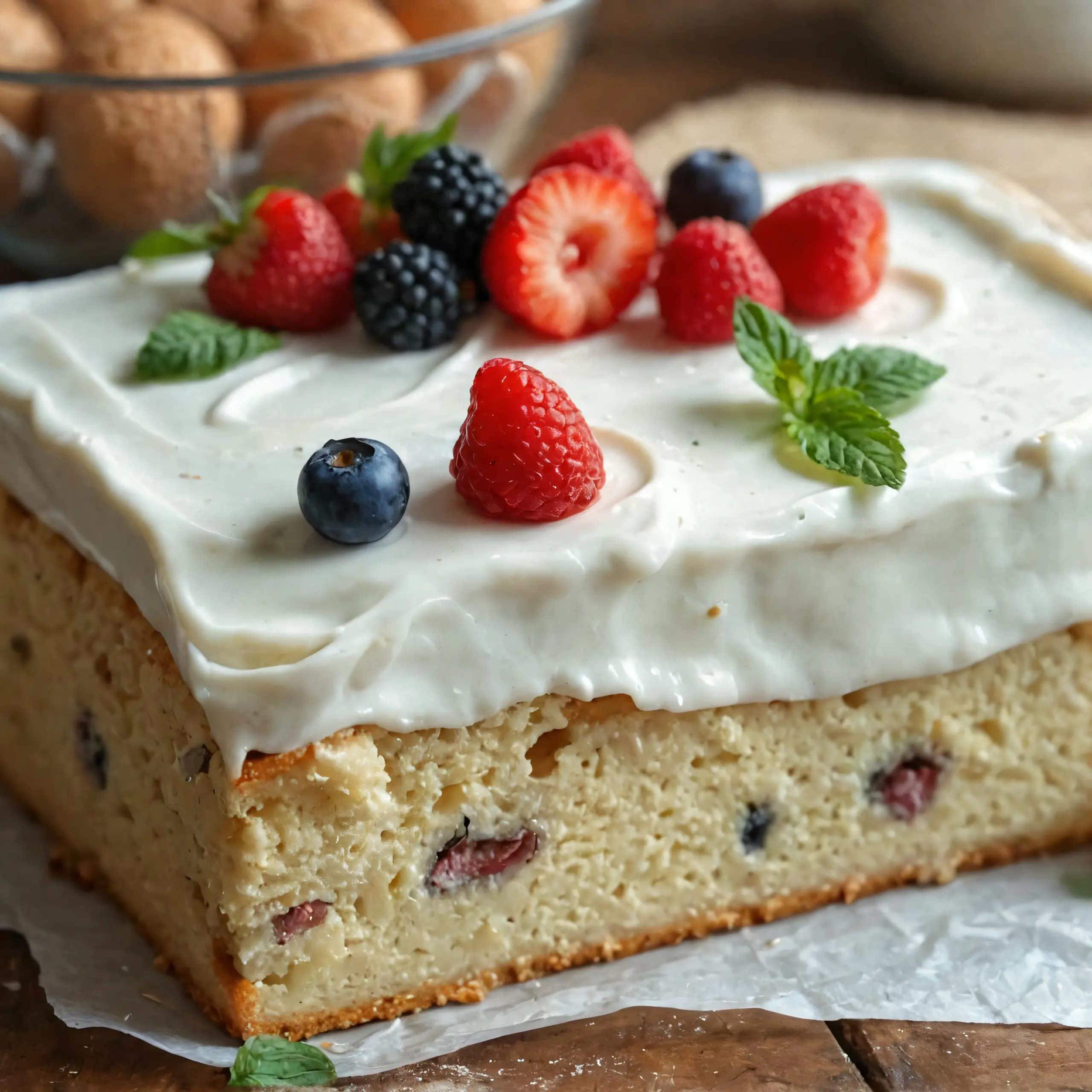
Overmixing after adding the wet ingredients develops gluten, resulting in a dense texture. Also, ensure the baking soda is fresh; old soda loses leavening power.
How long can the ganache be stored before it separates?
Ganache stays smooth for up to 3 days in the refrigerator if covered tightly. Warm gently and stir before spreading if it has thickened.
Is it possible to make this cake gluten‑free without changing the texture?
Yes, a 1‑to‑1 gluten‑free flour blend that contains xanthan gum will mimic the elasticity of wheat flour, preserving the light crumb.
What is the best way to reheat leftover slices?
Place a slice on a baking sheet and warm in a 300°F oven for 5‑7 minutes; this restores softness without drying the ganache.
Conclusion
The balance of kefir’s gentle acidity, oil’s tenderizing power, and a quick soda lift creates a sheet cake that feels both airy and satisfying. Each variation—citrus, nutty, vegan, or gluten‑free—demonstrates the recipe’s flexibility while keeping the core texture intact. By following the outlined steps and tips, home cooks can confidently produce a kefir sheet cake that impresses without demanding advanced technique, making it a reliable staple for any occasion.